Packaging changes.
Production can’t stop.
PiP Automation designs and builds specialist food packaging machinery for the first part of the line: denesting, feeding and placing trays, cards, lids and pots. From plastic and foil to card, fibre, moulded pulp and barrier-lined paperboard (MAP and VSP) formats, we automate both established packaging and the formats conventional machinery can struggle to handle.
Designed. Built. Tested. Supported. In North West England.
Tray denesting, card feeding, lidding and pot dropping on PiP machines in production.

PiP equipment is regularly incorporated into complete production lines supplied by leading packaging machinery manufacturers.
How we work with OEMs











Every tray has to get there first.
Every tray that reaches your filler, tray sealer or flow wrapper has to be separated and fed first. When that does not happen reliably, lines stop, operators intervene and production suffers.
Denesting, feeding and placing packaging is what we specialise in.
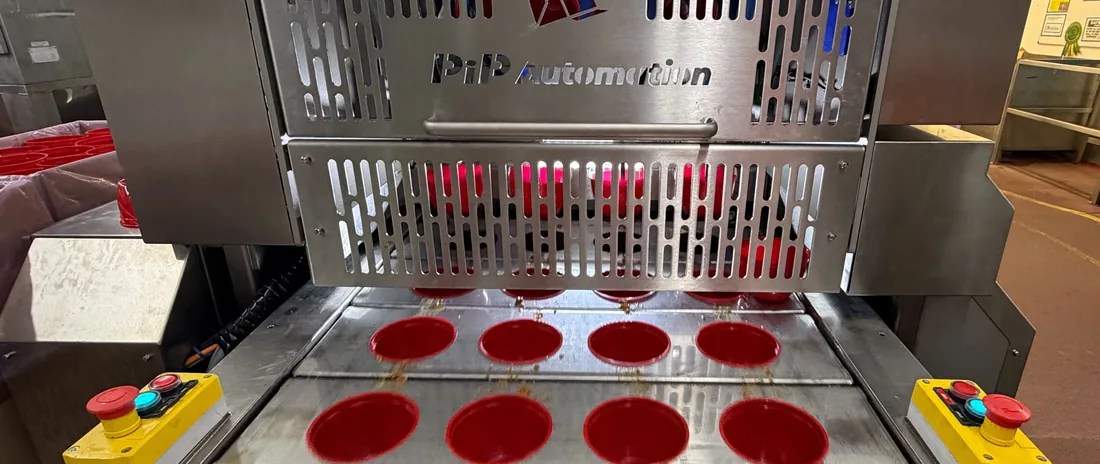
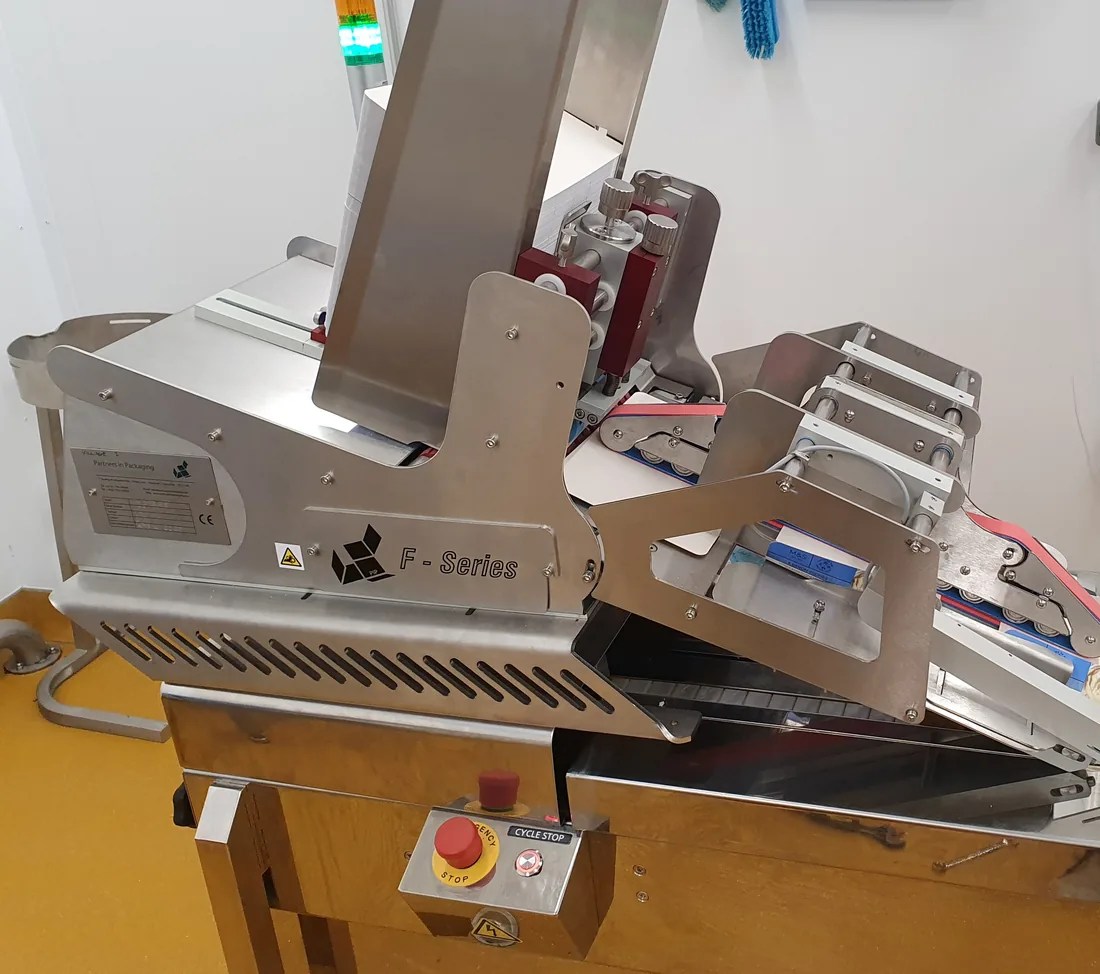
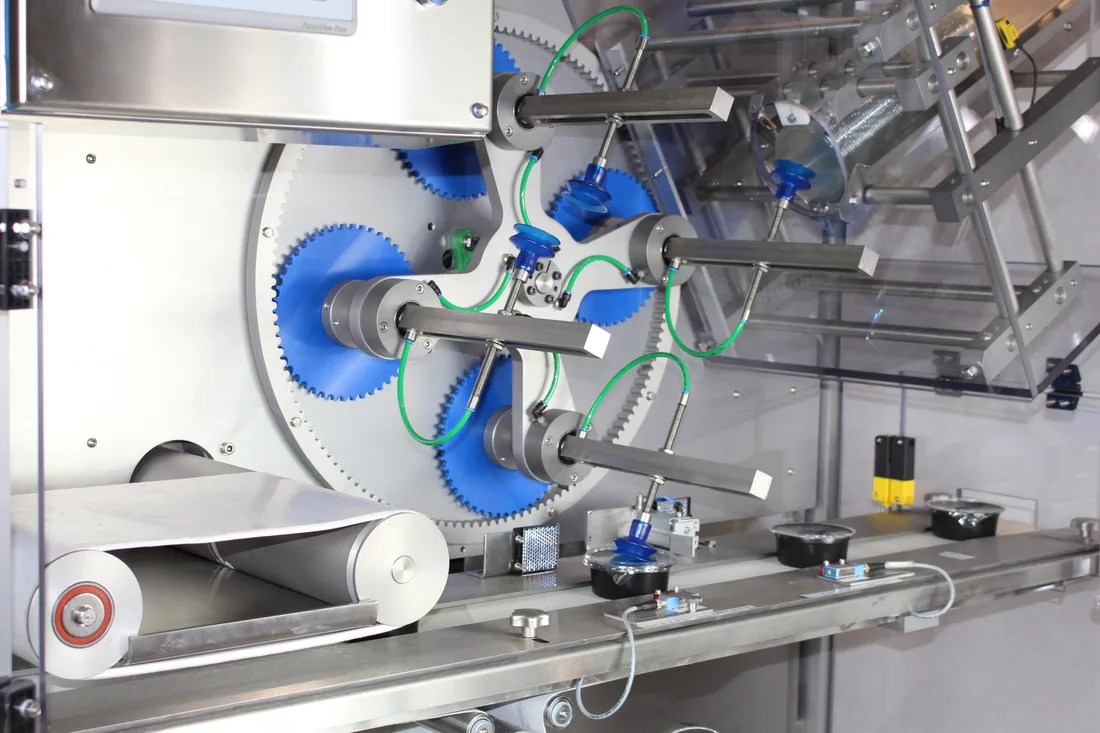

Something beyond the standard range? We build bespoke systems on our proven platforms, where the application justifies the engineering.
Explore our machinesYour packaging will change. Your denester shouldn’t have to.
A PiP denester runs different tray sizes and materials on the same machine. Factory pre-set tray masks and removable suction tooling make changing between tray sizes and materials quick and simple, typically taking just minutes.
As your packaging changes, your denester can change with it.
One machine. Multiple formats. No unnecessary restrictions.

Factory pre-set tray masks. Each one locates on the same machine and runs a different tray.
Foil, card, paperboard, pulp and recycled trays running on the PiP test rig.
Will your tray automate?
Send us your trays. We’ll run them on our in-house test rig and show you how they behave. We can assess separation, stack consistency, tray variation, pick reliability and suitability for production-speed automation.
Where there is a problem, our engineers can work with you, and your packaging supplier, to understand why.
Prove the tray before you commit to the machine. We’ll even send you the video.
Sustainable packaging isn’t always easy to automate.
Fibre, board and moulded pulp trays behave differently from conventional plastic. They can warp, vary, stick together and lock in the stack. Porous surfaces can make vacuum handling difficult and inconsistent nesting can lead to double picks, missed picks and damaged trays.
We automate sustainable packaging formats that conventional machinery can struggle to handle. PiP machines are already running card, fibreboard and barrier-lined paperboard (MAP and VSP) trays in production.
Fibre, pulp and card trays denesting on PiP machines.
Before and after on the same production line: trays fed by hand, then a PiP C Series denester.
Three shifts. One repetitive job. £95,000 a year.
Recruitment. Training. Supervision. Holidays. Sickness. PPE. Facilities. Staff turnover. Behind all of that is a repetitive job that somebody has to perform hour after hour.
Automation removes that dependency and allows people to concentrate on jobs where their judgement, skill and experience add more value, while the machine gets on with feeding trays.
From the PiP test floor.
See what our engineers have been testing, developing and installing. From production case studies to the latest challenges in fibre, card, foil and sustainable packaging, we share the developments shaping food packaging automation.
PiP Automation wins Innovative Packaging Machinery at the Automate UK Awards 2026
Our AS Series denester for fibreboard trays won the Innovative Packaging Machinery category at the Automate UK Awards 2026, chosen from a shortlist of eleven.
93% of British businesses are affected by the new EU packaging rules. Is your packaging line ready?
PPWR now applies across the EU, and the UK’s recyclability-modulated pEPR invoices arrive in November. The compliance conversation is all about materials. The production risk is at the infeed end of the line.
Engineered here. Built here. Supported here.
Our machinery is not bought in and rebadged. PiP designs, machines, builds, programs, tests, installs and supports its equipment from our factory in North West England.
That matters when you are trying to solve a packaging problem. Our engineers can test a tray, change a component, develop tooling, run another trial and prove the result, all under one roof.
Award-winning British engineering.
Winner, Innovative Packaging Machinery, Automate UK Awards 2026


Got a difficult tray? Send it to PiP.
Whether you are a food manufacturer introducing a new pack, a packaging company developing the next generation of trays, or a machine builder looking for specialist feeding equipment: send us the packaging and give us the problem. We’ll review it, test it where appropriate and tell you what we think.